Authentication Reckoning: How New Email Security Rules Affect Every Inbox in America
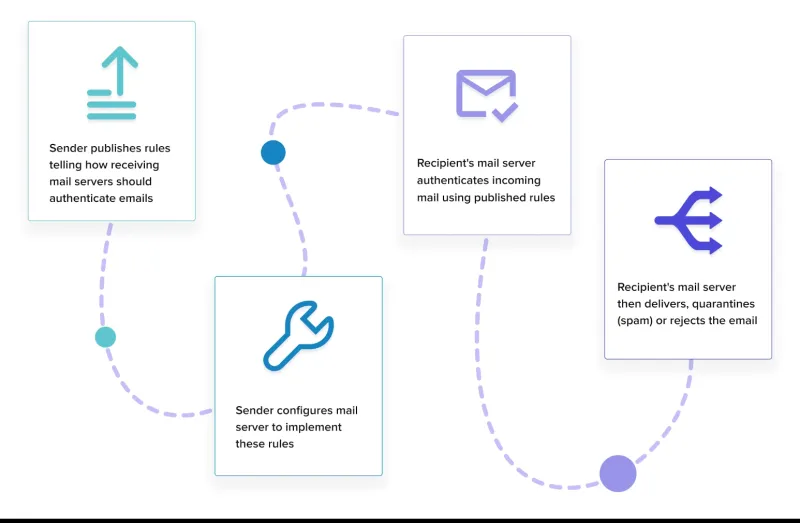
Photo: email security inbox authentication technology concept, via www.mailersend.com
For years, the technical backbone of email security operated like a set of traffic laws that everyone knew existed but few bothered to follow. Spam filters were tolerant. Providers looked the other way. And cybercriminals exploited every inch of that leniency to impersonate legitimate senders, harvest credentials, and defraud millions of Americans annually. That era is ending.
Starting in 2024, Google, Microsoft, and Yahoo began enforcing a trio of authentication standards — SPF, DKIM, and DMARC — with a rigor the industry had never previously seen. The move was framed primarily as a crackdown on bulk senders pushing more than 5,000 messages per day. But the downstream effects are being felt by ordinary users, small-business owners, and anyone who depends on email as a professional lifeline.
What These Acronyms Actually Mean
Before diving into implications, it helps to understand what these protocols do in plain language.
SPF (Sender Policy Framework) is essentially a list that a domain owner publishes, telling the internet which mail servers are authorized to send email on their behalf. When your email arrives at Gmail's servers, those servers check whether the sending IP address appears on that authorized list. If it doesn't, the message is flagged or rejected.
DKIM (DomainKeys Identified Mail) takes authentication a step further by attaching a cryptographic signature to outgoing messages. The receiving server can verify that signature against a public key stored in the sender's DNS records. If the message was tampered with in transit — or if the signature is absent entirely — the verification fails.
DMARC (Domain-based Message Authentication, Reporting, and Conformance) ties the first two together. It tells receiving servers what to do when SPF or DKIM checks fail: deliver the message anyway, quarantine it, or reject it outright. Crucially, DMARC also enables domain owners to receive reports about who is sending email that claims to come from their domain — a powerful tool for detecting impersonation.
Collectively, these three standards form a chain of trust. Without them, anyone can forge a "From" address and make a phishing email appear to originate from your bank, your employer, or your doctor's office.
Why Providers Are Acting Now
The Federal Trade Commission reported that Americans lost more than $10 billion to fraud in 2023, with email-based phishing and impersonation scams representing a significant portion of those losses. Major providers have long had the technical means to enforce these standards; what changed is the political and reputational pressure to actually do so.
Google's February 2024 requirements mandated that bulk senders authenticate their email with SPF and DKIM, maintain spam complaint rates below 0.10 percent, and implement at least a basic DMARC policy. Yahoo announced nearly identical requirements simultaneously. Microsoft followed with its own enforcement timeline for Outlook.
The message was unmistakable: the permissive era of email was over.
The Collateral Impact on Everyday Users
Here is where things get complicated for people who never sent a bulk marketing campaign in their lives.
First, small-business owners and freelancers who send invoices, newsletters, or client communications through third-party tools — think Mailchimp, Constant Contact, or even QuickBooks — discovered that their custom domains needed properly configured SPF and DKIM records. Many had never touched their DNS settings. Suddenly, legitimate business email was bouncing.
Second, individuals who manage their own domain-based email (a growing segment of privacy-conscious Americans who prefer [email protected] over a free webmail address) found themselves needing to audit their configurations or risk deliverability problems.
Third, and perhaps most insidiously, these changes have created a new phishing vector: fraudulent emails claiming to be from providers themselves, warning users that their accounts are "out of compliance" and urging them to click a link to fix the issue. The enforcement push, ironically, gave scammers a fresh pretext.
Practical Steps to Protect Your Accounts and Deliverability
Regardless of whether you are an individual or a small-business operator, the following steps are worth taking now.
Audit your sending domain. If you own a custom domain, use a free tool such as MXToolbox or Google's Admin Toolbox to check whether valid SPF, DKIM, and DMARC records are in place. These services provide clear, readable output that does not require a networking degree to interpret.
Enable two-factor authentication on your email account. Authentication standards protect the infrastructure, but your individual account remains vulnerable to credential theft. Using an authenticator app — rather than SMS codes, which are susceptible to SIM-swapping attacks — adds a critical layer of defense.
Scrutinize compliance-related emails carefully. Legitimate providers will never ask you to enter your password through a link in an email. If you receive a message claiming your account is failing authentication checks, navigate directly to the provider's official website rather than clicking any embedded link.
Review third-party app permissions. Many users grant sweeping access to their Gmail or Outlook accounts through connected apps they have long forgotten. Periodically reviewing and revoking unnecessary permissions limits your exposure if one of those third-party services is breached.
Monitor your spam folder periodically. During the transition period, some legitimate email from known senders may be incorrectly filtered while providers calibrate their enforcement. A weekly scan of your spam folder ensures nothing critical slips through.
The Bigger Picture
The tightening of email authentication standards represents one of the most meaningful structural improvements to internet security in recent memory. Phishing remains the entry point for the vast majority of data breaches, ransomware attacks, and financial fraud targeting American consumers and businesses alike. By making it meaningfully harder to impersonate trusted senders, these protocols chip away at one of cybercrime's most reliable tools.
But enforcement alone is not a complete solution. Authentication confirms that an email came from who it claims to be from — it does not guarantee that the sender has good intentions. A criminal who registers a domain that looks like your bank's, sets up proper SPF and DKIM records, and sends you a convincing phishing message will pass every authentication check.
Digital hygiene, skepticism, and ongoing education remain the final line of defense. The infrastructure is getting stronger. The human element, as always, requires deliberate attention.